MARKET ANALYSIS
Autozam (1989 to 1998)

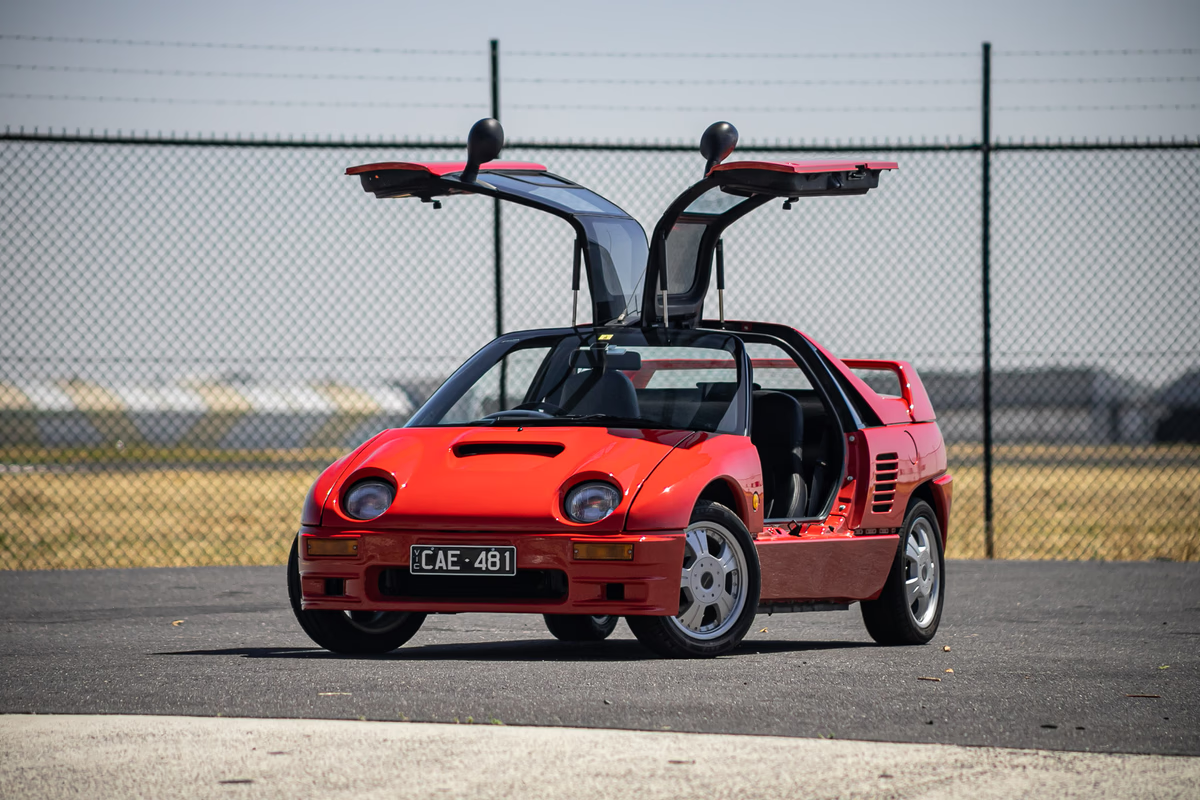
Autozam, which was manufactured globally from 1989 to 1998, was a daring experiment by Mazda to capture the hearts of city dwellers with a range of "cute" and compact vehicles, though it ultimately saw total production figures vary wildly across its quirky lineup. The halo of the brand, the mid-engined AZ-1 with its iconic gullwing doors, remains the most exclusive with only 4,392 units ever built, while other models like the Carol (a rebadged Suzuki Alto) and the Scrum (a micro-van) achieved much higher volumes due to their utility. In the 2026 Australian market, the Autozam sub-brand has reached legendary "cult" status, with desirability peaking for the AZ-1 as it becomes a centrepiece for Japanese domestic market (JDM) collectors. The buyer pool in Australia consists of niche enthusiasts and Kei car aficionados who are willing to navigate the complexities of grey-market importing to secure these diminutive machines, often viewing them as mobile pieces of art rather than mere transport. Locally, market value has skyrocketed for original, high-grade examples that have been imported from Japan, as 2026 buyers prioritise cars that have survived the years with their unique "toy-like" plastics and specific mechanical components intact. For the Australian enthusiast, an Autozam is more than just a failed Mazda subsidiary; it is a bold statement of nineties optimism that offers an unmatched presence on our roads.
Autozam, which was manufactured globally from 1989 to 1998, was a daring experiment by Mazda to capture the hearts of city dwellers with a range of "cute" and compact vehicles, though it ultimately saw total production figures vary wildly across its quirky lineup. The halo of the brand, the mid-engined AZ-1 with its iconic gullwing doors, remains the most exclusive with only 4,392 units ever built, while other models like the Carol (a rebadged Suzuki Alto) and the Scrum (a micro-van) achieved mu…