MARKET ANALYSIS
D (1970 to 1975)

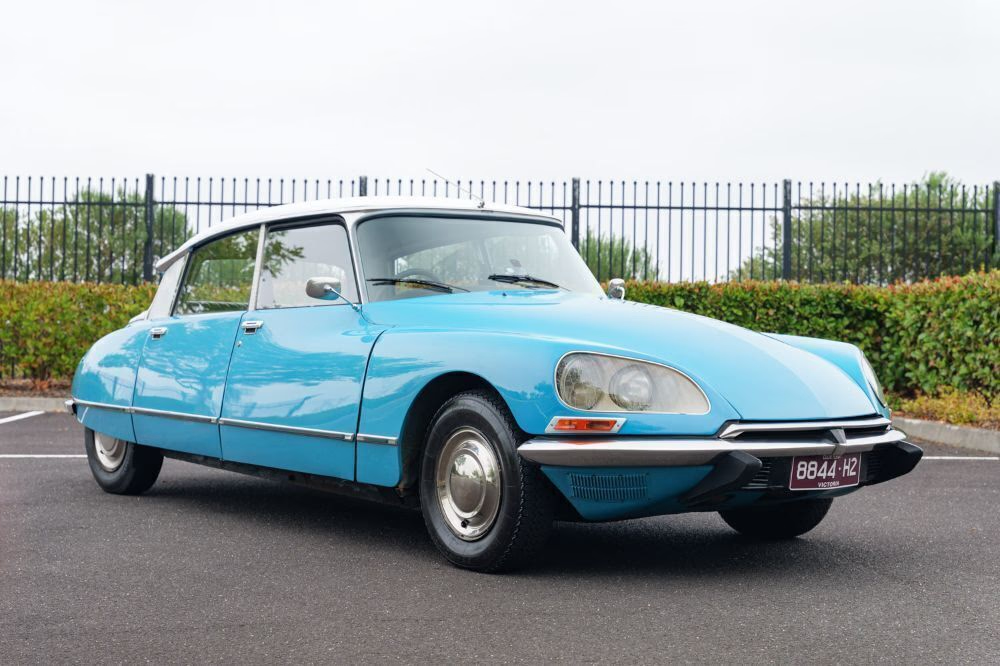
The Citroën D series, encompassing the D Special and D Super, represents the final, highly evolved chapter of the ID lineage, produced globally between 1970 and 1975. This era saw the range move closer to the flagship DS in both refinement and capability, most notably through the introduction of a redesigned dashboard featuring three large circular dials and the adoption of a foot-operated parking brake. The D Special served as the entry-level offering, while the D Super provided increased performance and the option for a five-speed manual transmission—a configuration so popular it eventually birthed the D Super 5, which utilised the larger 2.1-litre engine from the DS21. Within the Australian market, these late-model D variants are exceptionally desirable for their "best of both worlds" appeal, offering the legendary hydro-pneumatic ride and unmistakable silhouette without the daunting complexity of the semi-automatic gearbox found in the Pallas. The buyer pool is primarily comprised of dedicated Citroënists and design-focused collectors who appreciate the model's status as a pinnacle of mid-century French engineering. Consequently, market value for these vehicles remains remarkably strong, particularly for those with the coveted directional headlights and five-speed gearboxes, as they are increasingly viewed as blue-chip assets that provide a visceral and sophisticated alternative to more conventional European classics.
The Citroën D series, encompassing the D Special and D Super, represents the final, highly evolved chapter of the ID lineage, produced globally between 1970 and 1975. This era saw the range move closer to the flagship DS in both refinement and capability, most notably through the introduction of a redesigned dashboard featuring three large circular dials and the adoption of a foot-operated parking brake. The D Special served as the entry-level offering, while the D Super provided increased perfo…