MARKET ANALYSIS
EP3 (2001 to 2005)

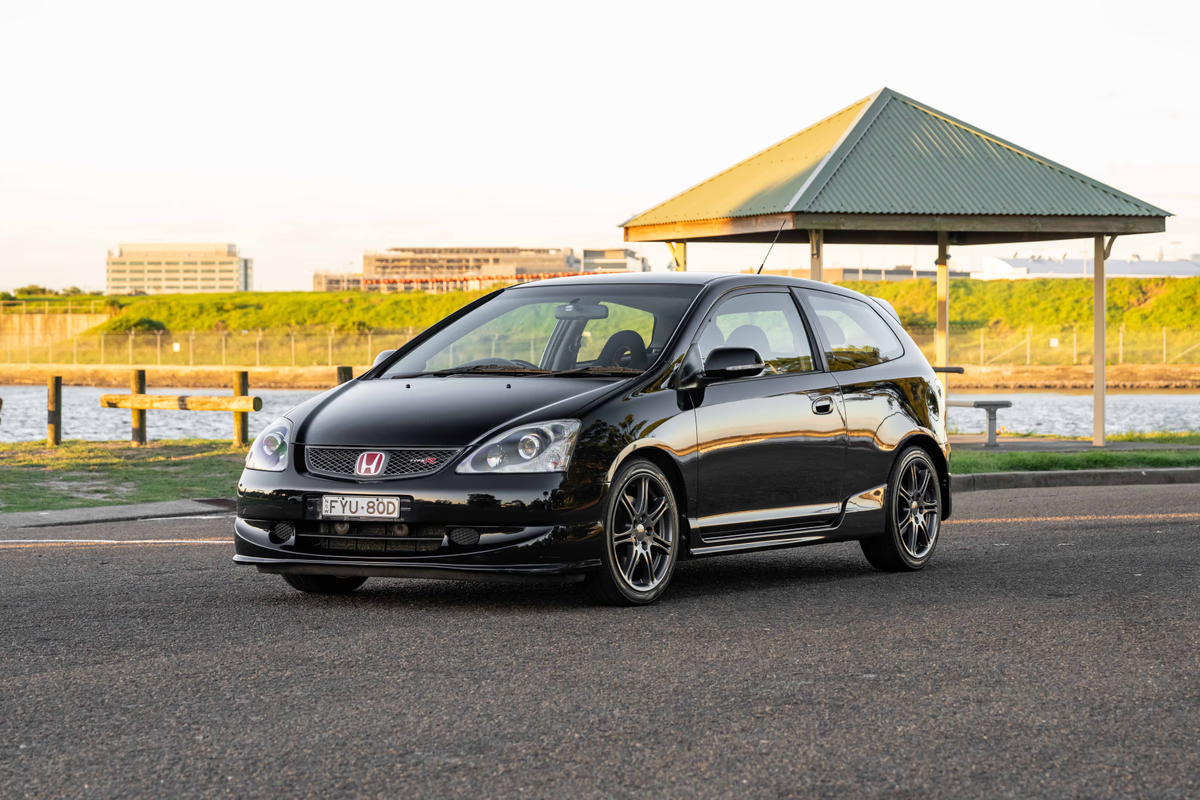
The seventh-generation Honda Civic Type R, famously known by its EP3 chassis code, redefined the front-wheel-drive hot hatch segment between 2001 and 2005 through its unique "breadvan" silhouette and high-revving personality. This generation was a significant departure as it was the first Type R to be manufactured at Honda’s Swindon plant in the UK, featuring the legendary K20A 2.0-litre i-VTEC engine paired with a distinct dash-mounted six-speed manual shifter for rapid-fire gear changes. While the European-market cars were highly capable, the Japanese Domestic Market (JDM) variants—frequently seen in Australia as grey imports—remained the pinnacle for enthusiasts, boasting a helical limited-slip differential, more aggressive Recaro seating, and an engine tuned to deliver a higher 158kW output. In the Australian market, the EP3 has transitioned into a blue-chip modern classic, attracting a dedicated buyer pool of "VTEC" purists and track-day regulars who value its razor-sharp handling and bulletproof mechanical reliability. Its desirability remains exceptionally high, with tidy, low-kilometre examples and late-series 2004–2005 facelift models maintaining a strong market value as they become increasingly scarce. As modern Type R models like the FL5 push into much higher price brackets, the EP3 continues to be a dominant search term locally, representing the raw, analogue peak of Honda’s naturally aspirated era.
The seventh-generation Honda Civic Type R, famously known by its EP3 chassis code, redefined the front-wheel-drive hot hatch segment between 2001 and 2005 through its unique "breadvan" silhouette and high-revving personality. This generation was a significant departure as it was the first Type R to be manufactured at Honda’s Swindon plant in the UK, featuring the legendary K20A 2.0-litre i-VTEC engine paired with a distinct dash-mounted six-speed manual shifter for rapid-fire gear changes. While…