MARKET ANALYSIS
1300 (1970 to 1977)

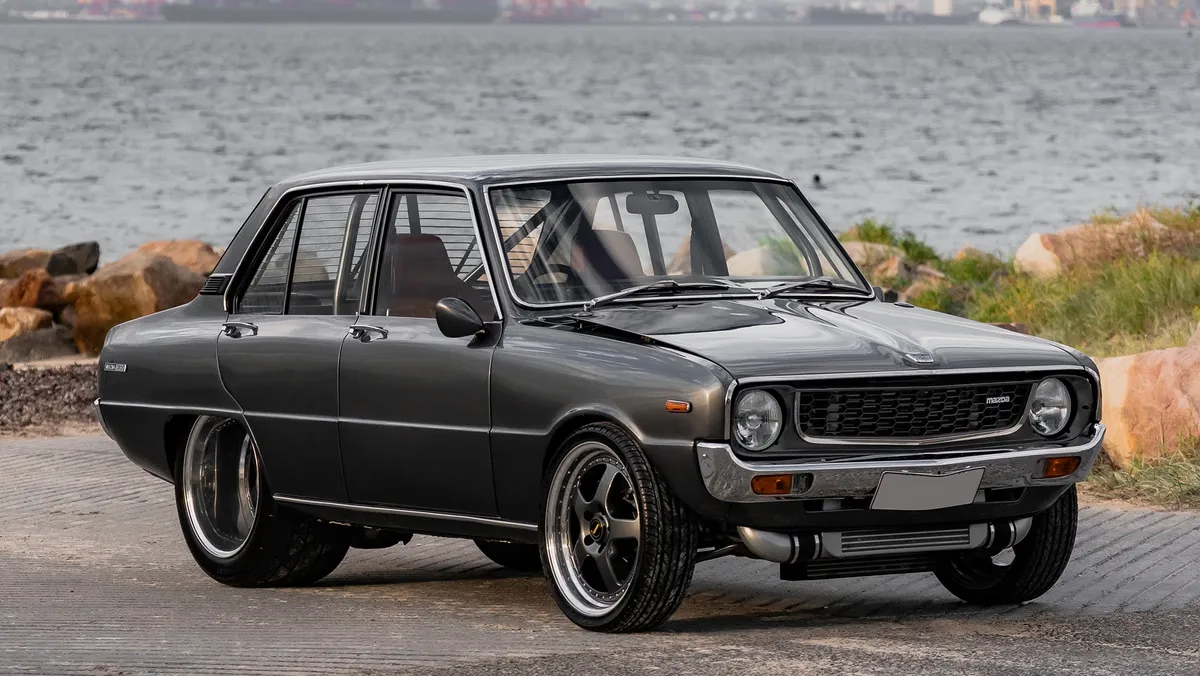
The Mazda 1300, produced globally between 1970 and 1977 as part of the versatile Familia line, has evolved from a humble economy commuter into a cornerstone of the Australian modifying scene. While originally available in sedan, wagon, and sleek coupe body styles, it is the "FA3TS" chassis that has achieved legendary status locally due to its lightweight construction and mechanical simplicity. In Australia, the 1300 is most famous for its role as the ultimate "sleeper" or budget-friendly alternative to the RX-3, with a massive percentage of surviving examples undergoing high-tech rotary conversions using 12A or 13B bridge-ported and turbocharged engines. This modification culture has created an incredibly active and competitive buyer pool, ranging from old-school purists to modern drag and drift enthusiasts who value the car's impressive power-to-weight ratio. Because of this cult following, the desirability for two-door coupes and clean, unchopped sedans has skyrocketed, with market values reflecting its transition from a simple "first car" to a genuine Japanese classic. Its status as a "rotary-ready" icon ensures that the Mazda 1300 remains a dominant search term in the local enthusiast market, often outshining more modern rivals through its pure, analogue heritage and endless potential for customisation.
The Mazda 1300, produced globally between 1970 and 1977 as part of the versatile Familia line, has evolved from a humble economy commuter into a cornerstone of the Australian modifying scene. While originally available in sedan, wagon, and sleek coupe body styles, it is the "FA3TS" chassis that has achieved legendary status locally due to its lightweight construction and mechanical simplicity. In Australia, the 1300 is most famous for its role as the ultimate "sleeper" or budget-friendly alterna…