MARKET ANALYSIS
Series CD (1975 to 1981)

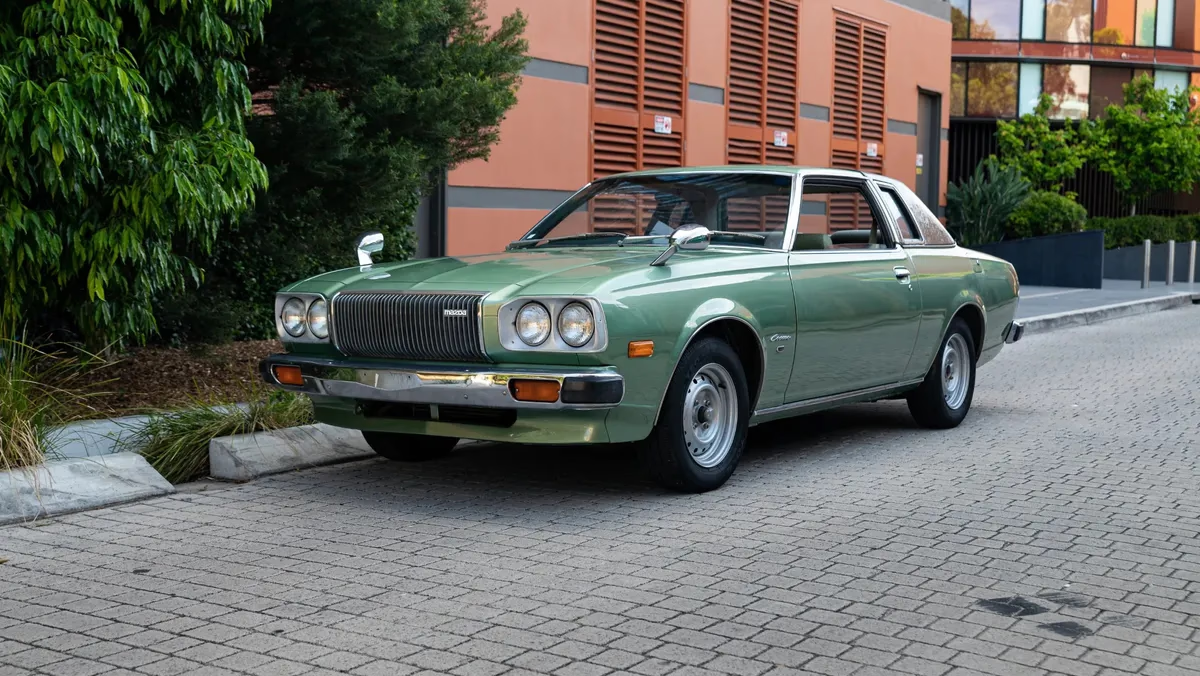
The Mazda Cosmo (Series CD), which was manufactured globally between 1975 and 1981, marked a significant evolution of the nameplate as it transitioned into a larger, more opulent "personal luxury" grand tourer. Often badged as the RX-5 in the Australian market, this generation saw immense commercial success, particularly in its debut year where it moved over 50,000 units in Japan as the Cosmo AP (Anti-Pollution). In the 2026 Australian market, the CD series has developed a strong niche following, with desirability notably high for the rare Landau-roofed variants and the original rotary-powered models that embody the era's unique brown-and-gold aesthetic. The buyer pool in Australia is comprised of seventies-era enthusiasts and rotary collectors who appreciate the RX-5 as a more comfortable, luxurious alternative to the more spartan RX-3 or the later RX-7. Locally, market value has seen a steady rise for original survivors that have retained their complex period interiors and factory accessories, as 2026 buyers prioritise cars with minimal rust and a verified Australian history. As the RX-7 eventually took over the sports-car mantle in 1979, the CD series remains celebrated by local aficionados for its plush ride and its role in proving that Mazda's rotary technology could be refined for a more sophisticated, executive-level audience.
The Mazda Cosmo (Series CD), which was manufactured globally between 1975 and 1981, marked a significant evolution of the nameplate as it transitioned into a larger, more opulent "personal luxury" grand tourer. Often badged as the RX-5 in the Australian market, this generation saw immense commercial success, particularly in its debut year where it moved over 50,000 units in Japan as the Cosmo AP (Anti-Pollution). In the 2026 Australian market, the CD series has developed a strong niche following…