MARKET ANALYSIS
FC 2nd Gen (1986 to 1992)

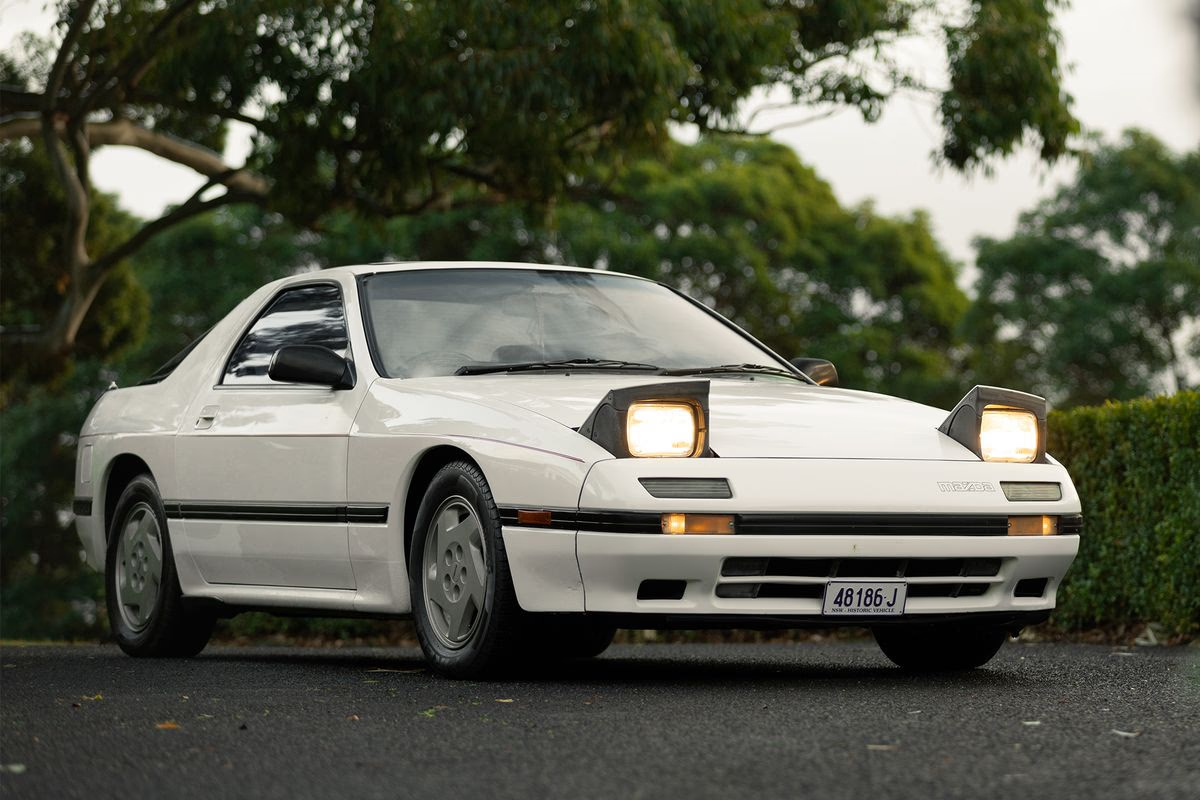
The second-generation Mazda RX-7 (FC chassis) delivered a more refined and mature driving experience than its predecessor, trading some lightweight purity for improved comfort and usability while remaining a strong performer. Early Series 4 models (1986–1988) were offered with two versions of the 13B twin-rotor engine: a naturally aspirated variant producing 148 hp, and the turbocharged Turbo II delivering 182 hp. For 1989, the updated Series 5 brought revised styling and further performance gains, with the Turbo II upgraded to 203 hp. Mazda also offered the limited-production GTUs, which combined many performance-oriented components—such as larger brakes, sport seats, a chin spoiler, and shorter gearing—with a simplified non-turbo specification, omitting luxury items like air conditioning unless dealer-fitted. Production of the second-generation RX-7 concluded in 1991, ahead of the launch of the third-generation RX-7 in 1992.
The second-generation Mazda RX-7 (FC chassis) delivered a more refined and mature driving experience than its predecessor, trading some lightweight purity for improved comfort and usability while remaining a strong performer. Early Series 4 models (1986–1988) were offered with two versions of the 13B twin-rotor engine: a naturally aspirated variant producing 148 hp, and the turbocharged Turbo II delivering 182 hp. For 1989, the updated Series 5 brought revised styling and further performance gai…