MARKET ANALYSIS
200 Series (1975 to 1993)

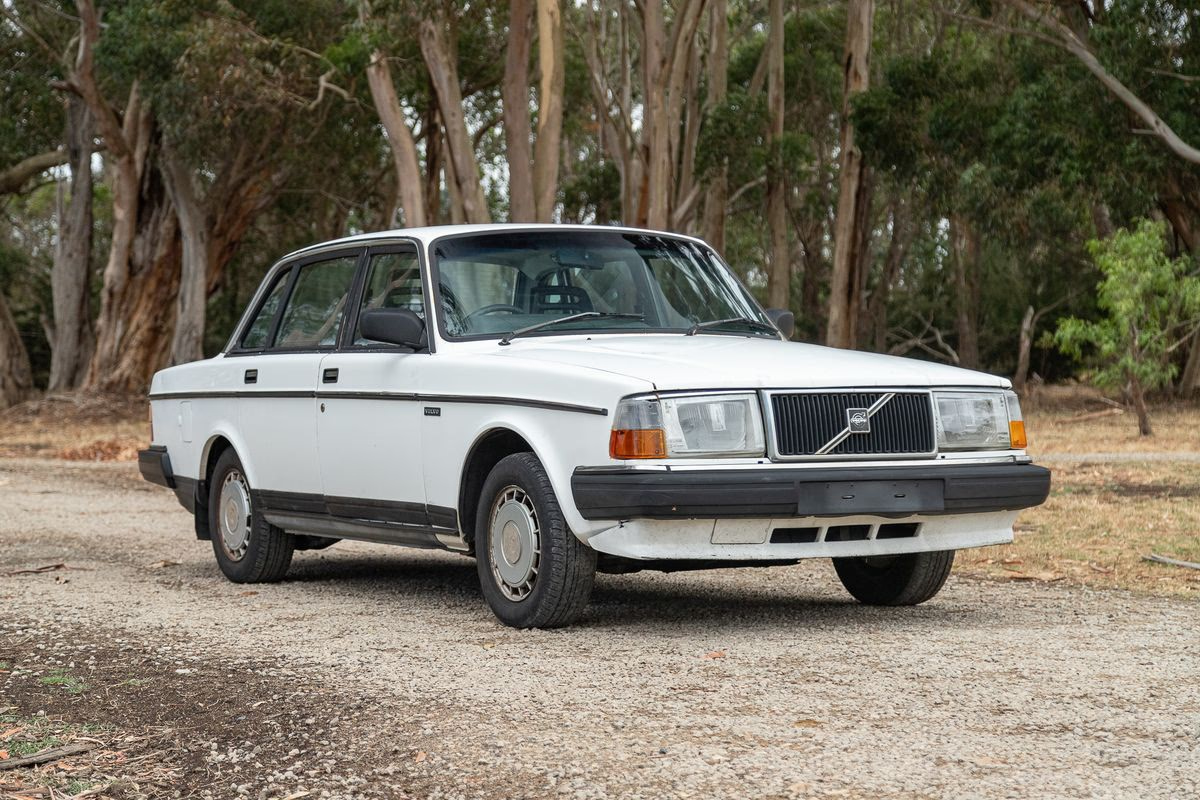
The Volvo 200 Series stands as the definitive symbol of Swedish durability, maintaining a worldwide production life from 1974 until 1993 as an evolution of the earlier 140 Series. This generation utilised a logical naming convention until 1985, where the middle digit represented the engine cylinders and the final digit denoted the body style—such as the 242 coupe, 244 sedan, or the legendary 245 wagon—before transitioning to the simplified 240 and 260 designations. In the Australian market, the 200 Series holds immense desirability and a massive search presence, evolving from a sensible family hauler into a cult-status "modern classic" celebrated by the OzVolvo community. The model’s reputation for being "tank-like" is backed by its role as a motorsport underdog, notably when the "Flying Brick" 240 Turbo dominated the 1986 Australian Touring Car Championship and took victory at Bathurst with Robbie Francevic. The buyer pool in 2026 is exceptionally active, targeting everything from the rare, Bertone-designed 262C luxury coupe to the standard 2.3-litre four-cylinder variants, which remain a top choice for enthusiasts seeking an unbreakable, rear-wheel-drive platform. With market values for clean, original wagons and performance-modified sedans on a steady rise, the 200 Series continues to be a dominant force in the local scene, proving that Volvo's focus on safety and robust engineering has created an ageless automotive icon.
The Volvo 200 Series stands as the definitive symbol of Swedish durability, maintaining a worldwide production life from 1974 until 1993 as an evolution of the earlier 140 Series. This generation utilised a logical naming convention until 1985, where the middle digit represented the engine cylinders and the final digit denoted the body style—such as the 242 coupe, 244 sedan, or the legendary 245 wagon—before transitioning to the simplified 240 and 260 designations. In the Australian market, the …