MARKET ANALYSIS
W10 (1984 to 1989)

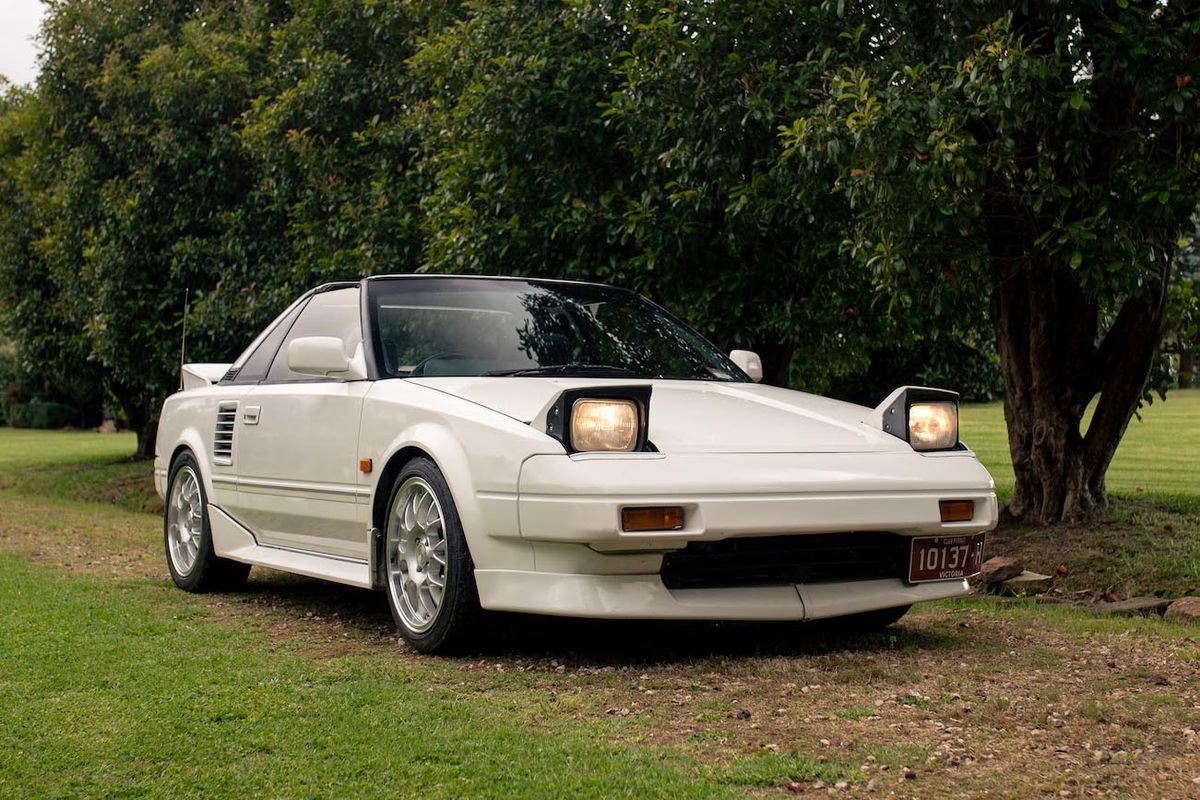
The Toyota MR2, manufactured globally from 1984 until 1989 in its first-generation "W10" form, was a revolutionary departure for the brand, introducing the exotic mid-engine layout to a mass-market audience. Affectionately known by its chassis code, the AW11, this "origami-styled" sports car was built around the high-revving 1.6-litre 4A-GE Twin Cam engine, with the 1988 introduction of the 4A-GZE supercharged variant providing the punch needed to rival much more expensive European machinery. In the 2026 Australian market, the W10 has completed its transition from a budget-friendly runabout into a celebrated blue-chip classic, with the local buyer pool now dominated by serious collectors and JDM purists who value the car's razor-sharp, analog handling—developed with input from racing legend Dan Gurney. Desirability has reached an all-time high in 2026, largely fueled by the intense media hype surrounding the imminent return of a fourth-generation MR2, which has caused enthusiasts to revisit the AW11 as the "pioneer" of the midship lineage. Consequently, the market value of the first-gen MR2 in Australia is seeing a dramatic split; while well-loved "beater" examples are increasingly rare and still trade at accessible levels for restorers, factory-original Supercharged T-Bar models and pristine, rust-free survivors have ascended into the upper tiers of collector car pricing, as they are now recognised as one of the most significant Japanese performance cars of the 1980s.
The Toyota MR2, manufactured globally from 1984 until 1989 in its first-generation "W10" form, was a revolutionary departure for the brand, introducing the exotic mid-engine layout to a mass-market audience. Affectionately known by its chassis code, the AW11, this "origami-styled" sports car was built around the high-revving 1.6-litre 4A-GE Twin Cam engine, with the 1988 introduction of the 4A-GZE supercharged variant providing the punch needed to rival much more expensive European machinery. In…