MARKET ANALYSIS
Spider (1962 to 1966)

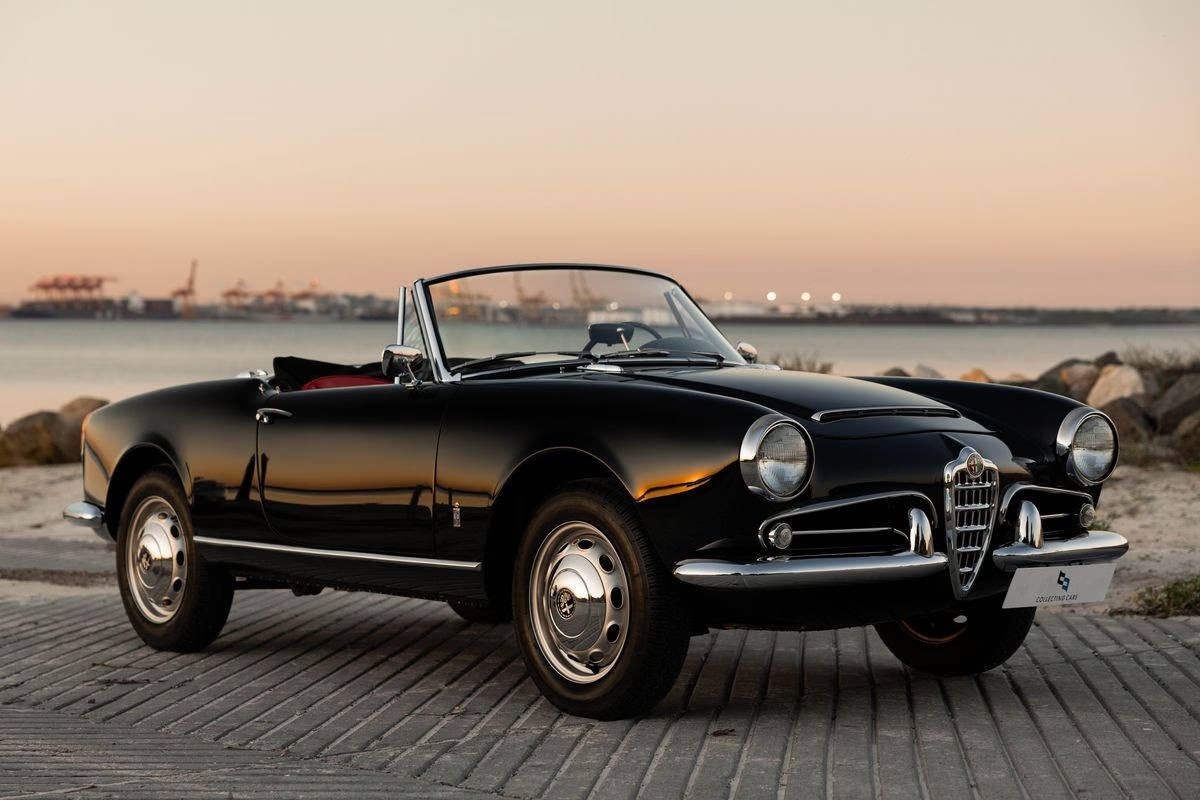
The Alfa Romeo Giulia Spider (Type 101.23) was introduced in 1962 as a mechanical evolution of the outgoing Giulietta, serving as the performance-oriented open-top flagship until production ended in 1966. Retaining the iconic Pininfarina-designed roadster body, the model is easily identified by its functional bonnet scoop, necessitated by the taller 1.6L Twin Cam inline-four engine that replaced the previous 1.3L unit. In standard "Normale" form, the front-engine, rear-wheel-drive Giulia produced 68kW (92hp), while the high-performance Spider Veloce utilized twin Weber carburettors to deliver 82kW (112hp) through a five-speed manual transmission. Australian market relevance is defined by extreme scarcity; with only 404 factory right-hand-drive units produced globally, local examples are prized assets within the domestic collector circuit. Current market desirability is exceptionally high, particularly for the Veloce, which sits in a "blue-chip" investment bracket with values often exceeding $180,000 AUD, while standard models typically command between $90,000 and $130,000 AUD. The buyer pool is comprised of elite vintage collectors who view the 101-series as the final expression of Alfa Romeo's post-war "Golden Era" design. Production concluded in 1966 when the model was replaced by the Alfa Romeo Spider (Duetto).
The Alfa Romeo Giulia Spider (Type 101.23) was introduced in 1962 as a mechanical evolution of the outgoing Giulietta, serving as the performance-oriented open-top flagship until production ended in 1966. Retaining the iconic Pininfarina-designed roadster body, the model is easily identified by its functional bonnet scoop, necessitated by the taller 1.6L Twin Cam inline-four engine that replaced the previous 1.3L unit. In standard "Normale" form, the front-engine, rear-wheel-drive Giulia produce…